
Microplastics in Food: How Scientists Detect Them Under a Microscope
Nov 25th 2026
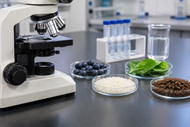
Microplastics have been reported in everything from seafood and table salt to drinking water, fruits and vegetables. While many of these tiny plastic particles are invisible to the naked eye, microscopy allows scientists to examine their size, shape, color and physical characteristics.
But what do microplastics actually look like under a microscope, and how do researchers distinguish plastic particles from other microscopic materials found in food?
From food safety laboratories to environmental research facilities, microscopes play an important role in investigating microplastic contamination and helping scientists better understand how plastic particles enter the food supply.
What Are Microplastics?
Microplastics are small plastic particles typically measuring less than 5 millimeters in size. Some are large enough to be seen without magnification, while others require specialized laboratory equipment to detect.
Microplastics are generally classified into two categories:
- Primary microplastics: Plastic particles intentionally manufactured at small sizes, such as certain industrial plastic pellets.
- Secondary microplastics: Particles formed when larger plastic products break down through environmental exposure, abrasion and degradation.
Even smaller plastic particles, often measuring less than one micrometer, are commonly referred to as nanoplastics. These particles are considerably more difficult to detect using conventional optical microscopy.
What Foods Contain Microplastics?
Researchers have reported microplastics in a wide variety of foods and beverages. However, concentrations can vary significantly depending on environmental conditions, sample collection and laboratory testing methods.
|
Food or Beverage |
Potential Sources of Microplastics |
|
Seafood |
Contaminated oceans and waterways |
|
Table salt |
Environmental contamination during salt production |
|
Drinking water |
Environmental contamination and potential packaging-related exposure |
|
Fruits and vegetables |
Contaminated soil, water and surface deposition |
|
Honey |
Airborne particles and environmental exposure |
|
Milk |
Environmental and potential processing-related contamination |
|
Tea |
Water and certain plastic-based tea bags |
|
Meat |
Environmental exposure and potential processing-related contamination |
Seafood is a particularly important area of microplastic research because aquatic organisms may encounter plastic particles in their surrounding environment. Shellfish such as mussels and oysters are frequently studied because of their filter-feeding behavior.
The presence of microplastics does not necessarily mean that a food is unsafe to consume. Researchers continue to investigate exposure levels, measurement accuracy and potential health implications.
How Do Microplastics Get Into Food?
Microplastics can enter the food supply through several potential pathways.
Environmental Pollution
As plastic waste breaks down, small particles can accumulate in oceans, rivers, lakes and agricultural soils. These particles may come into contact with crops, livestock and aquatic organisms.
Airborne Microplastics
Synthetic textiles, industrial activities and degrading plastic materials can release microscopic particles into the air. These particles may settle on agricultural products and food preparation surfaces.
Food Processing and Packaging
Plastic equipment, containers, packaging and preparation surfaces are being investigated as potential sources of microplastic contamination. The extent of their contribution to overall dietary exposure remains uncertain.
Understanding these pathways helps researchers determine where contamination occurs and how it might be reduced.
What Do Microplastics Look Like Under a Microscope?
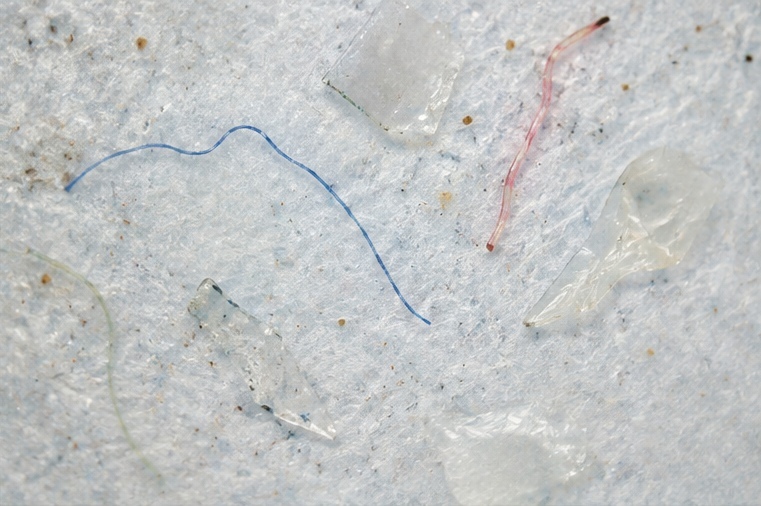
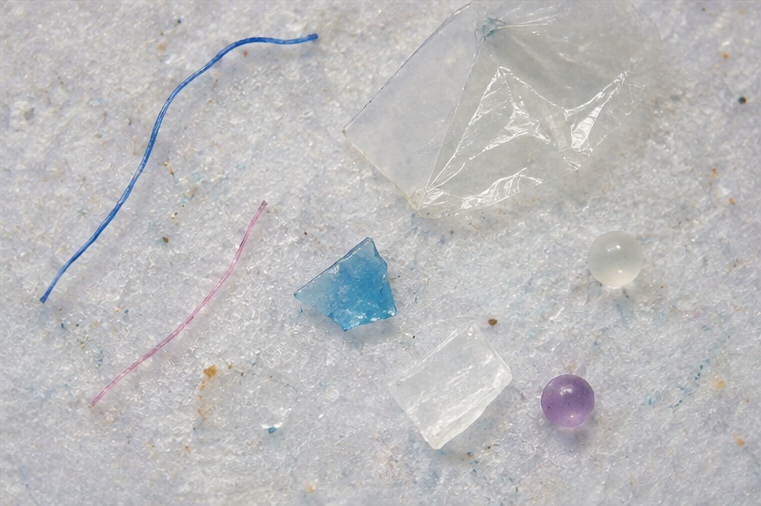
Under a microscope, microplastics can appear as irregular fragments, thin fibers, transparent films or rounded particles. Their appearance depends on the original plastic material and how it has been manufactured or degraded.
Common microplastic shapes include:
|
Microplastic Type |
Microscopic Appearance |
|
Fibers |
Long, thin, thread-like strands |
|
Fragments |
Irregular particles with rough or angular edges |
|
Films |
Thin, flat, sometimes transparent plastic sheets |
|
Beads |
Small, rounded or spherical particles |
|
Foam |
Irregular particles with porous structures |
Microplastic particles may appear blue, red, green, black, white or transparent under magnification.
Transparent particles can be particularly difficult to distinguish from organic matter. Natural fibers, minerals and biological debris may also resemble plastic particles, making visual identification alone unreliable.
Researchers often combine microscopy with additional analytical techniques to confirm whether a particle is actually plastic.
How Scientists Detect Microplastics in Food
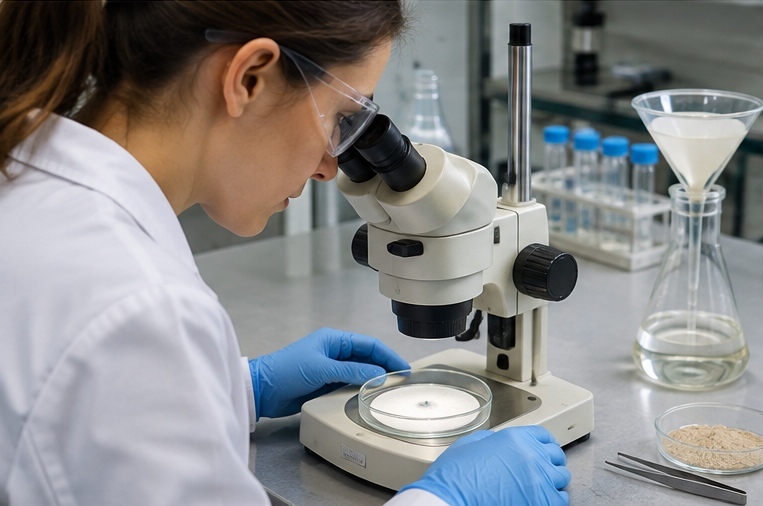
Detecting microplastics in food typically involves several stages of laboratory analysis. Simply placing a food sample under a microscope is rarely sufficient for reliable identification.
1. Sample Collection and Preparation
Researchers collect food or beverage samples using controlled procedures designed to minimize outside contamination.
Glass containers, filtered liquids and clean laboratory equipment may be used to reduce the introduction of additional plastic particles.
2. Removal of Organic Material
Food contains proteins, fats, carbohydrates and other materials that can interfere with microscopic examination.
Depending on the sample, researchers may use chemical or enzymatic digestion methods to remove organic material while preserving the suspected plastic particles.
3. Separation and Filtration
The prepared sample may undergo density separation or filtration to isolate particles from the remaining material.
The filter captures particles that can then be examined under a microscope.
4. Microscopic Examination
Researchers use microscopes to locate, count, photograph and measure suspected microplastics.
Digital microscope cameras and calibrated imaging software allow scientists to document particle dimensions, shapes and other characteristics.
5. Chemical Identification
Because other materials can resemble plastic, researchers frequently use additional analytical techniques to verify particle composition.
These include:
- Fourier-transform infrared spectroscopy (FTIR)
- Raman spectroscopy
- Pyrolysis gas chromatography-mass spectrometry (Py-GC/MS)
These techniques provide chemical information that conventional visual microscopy cannot establish on its own.
What Types of Microscopes Are Used to Detect Microplastics?
Several types of microscopes are used in microplastic research. Selecting the right microscope depends on particle size, sample preparation and the objectives of the investigation.
Stereo Microscopes
Stereo microscopes, also known as dissecting microscopes, are useful for examining larger suspected microplastic particles.
Their wide field of view and three-dimensional viewing capabilities make them particularly useful for:
- Screening filtered samples
- Examining plastic fragments and fibers
- Sorting suspected microplastic particles
- Manipulating individual particles
- Documenting surface characteristics
Stereo microscopes are often used during the initial stages of microplastic analysis.
Compound Microscopes
Compound microscopes provide higher magnification for examining smaller particles that may be difficult to characterize with a stereo microscope.
Researchers can use compound microscopes to investigate particle morphology, fine fibers, dimensions and transparency.
Transmitted light illumination can help reveal details in thin or transparent particles.
Polarizing Microscopes
Polarizing microscopes use polarized light to examine the optical properties of materials.
Certain plastic particles exhibit birefringence, an optical property that can make them more noticeable under crossed polarizers.
Polarized light microscopy can provide additional information about a particle's structure and help distinguish some materials. However, not all plastics exhibit the same optical behavior, and some natural materials also display birefringence.
Fluorescence Microscopes
Fluorescence microscopy is another technique used in microplastic research.
Researchers may apply fluorescent dyes, such as Nile Red, to prepared samples to make suspected plastic particles more visible against their surroundings.
Fluorescence microscopy can help researchers screen samples containing numerous small particles, although additional testing may still be required to eliminate false positives.
Digital Microscopes and Microscope Cameras
Digital imaging systems allow researchers to capture, measure, annotate and store images of suspected microplastics.
These capabilities are particularly valuable in research laboratories where scientists need to compare particle sizes, document findings and maintain consistent records across multiple samples.
What Magnification Is Needed to See Microplastics?
The magnification needed to observe microplastics depends on the size and characteristics of the particles being examined.
|
Total Magnification |
Typical Application |
|
10x–40x |
Screening larger fragments and fibers |
|
40x–100x |
Examining smaller particles and surface features |
|
100x–400x |
Examining fine particles and microscopic fibers |
|
400x and above |
Investigating finer particle characteristics where optical resolution permits |
Higher magnification does not automatically improve microplastic identification. Optical resolution, illumination, contrast and sample preparation are equally important.
Most nanoplastics are beyond the practical imaging capabilities of conventional optical microscopes and require more advanced analytical techniques.
Can You Detect Microplastics at Home with a Microscope?
A standard stereo or compound microscope can be used to observe suspected microplastics in prepared water or food samples.
For example, students and microscopy enthusiasts can examine filtered water samples or known plastic reference materials to learn how different particles appear under magnification.
However, identifying an unknown particle as plastic requires more than visual examination. Cotton fibers, hair, minerals and other materials can easily be mistaken for microplastics.
Home microscopy can provide a valuable educational experience, but it should not be considered a substitute for validated laboratory testing.
Are Microplastics in Food Harmful to Humans?
The potential health effects of consuming microplastics remain an active area of scientific research.
Scientists are investigating whether plastic particles may contribute to inflammation, cellular changes and other biological effects.
However, detecting microplastics in food does not establish that consuming those foods causes harm. According to the U.S. Food and Drug Administration , available evidence has not demonstrated that the levels detected in foods present a human health risk.
More research is needed to understand long-term exposure, differences between polymer types and the biological effects of smaller plastic particles.
Choosing a Microscope for Microplastic Research
Whether you are conducting environmental research, analyzing food samples or developing an educational laboratory program, choosing the appropriate microscope is an important part of microplastic analysis.
When selecting a microscope, consider:
- Optical resolution and magnification range
- Reflected and transmitted light illumination
- Polarized light or fluorescence capabilities
- Digital image capture
- Particle measurement software
- Working distance for sample manipulation
Microscope World offers a range of scientific-grade stereo, compound, polarizing, fluorescence and digital microscopy systems suitable for particle examination, laboratory research and scientific education.
Contact Microscope World for assistance selecting a microscope and imaging system based on your sample types and research requirements.
Frequently Asked Questions
Can you see microplastics with a regular microscope?
Yes. Many larger microplastic particles can be observed using a conventional stereo or compound microscope. However, visual examination alone cannot reliably confirm their chemical composition.
What microscope is best for detecting microplastics?
Stereo microscopes are useful for screening larger particles, while compound and fluorescence microscopes can help examine smaller particles. The best microscope depends on particle size and research requirements.
Can microplastics be found in drinking water?
Yes. Researchers have reported microplastics in both bottled and tap water. Concentrations vary depending on water sources, environmental conditions and analytical methods.
Can you see microplastics in food with the naked eye?
Some larger microplastics may be visible without magnification. Smaller particles generally require microscopy or specialized analytical equipment.
Can microscopes detect nanoplastics?
Conventional optical microscopes generally cannot reliably resolve most nanoplastics. Specialized imaging and analytical techniques are needed to investigate particles at these scales.
How do scientists confirm that a particle is plastic?
Scientists commonly use FTIR or Raman spectroscopy to analyze a particle's molecular composition and confirm whether it consists of a plastic polymer.
Why is microscopy important for microplastic research?
Microscopy allows researchers to locate, measure, classify and document suspected microplastic particles. It is an important component of broader laboratory analysis and environmental contamination research.


