
The Role of Stereo Microscopes in Semiconductor Packaging & Microelectronics Failure Analysis
Apr 20th 2026
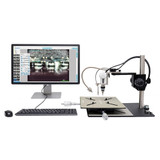
As semiconductor devices continue to shrink in size while increasing in complexity, the need for precise inspection tools has never been greater. From advanced packaging techniques to high-density microelectronics, even the smallest defect can lead to performance issues or complete device failure.
Stereo microscopes play a critical role in identifying these issues early, making them an essential t
…
How Numerical Aperture, Depth of Field, and Working Distance Interact in Advanced Stereo Microscopy
Apr 2nd 2026
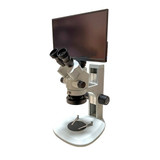
Stereo microscopes are essential tools for applications like jewelry inspection, electronics work, and precision assembly. While many users focus on magnification, the real performance of a stereo microscope depends on three critical optical factors: numerical aperture (NA), depth of field, and working distance .
Understanding how these three interact can dramatically improve your imaging result
…

How Stereo Microscopes Support ISO 17025, GMP, and QA/QC Lab Compliance
Feb 5th 2026
Laboratories operating in regulated industries face increasing pressure to meet strict quality and compliance requirements. Whether you manage a calibration lab, pharmaceutical production facility, medical device inspection team, or industrial QA department, standards such as ISO/IEC 17025 , Good Manufacturing Practices (GMP), and internal QA/QC programs play a major role in daily operations.
O
…

Using Stereo Microscopes for Micro-Dissection and Microsurgery: Requirements, Workflow & Ergonomic Considerations
Dec 31st 2025
Stereo microscopes play a critical role in micro-dissection and microsurgical workflows where precision, depth perception, and operator comfort are essential. Unlike compound microscopes, stereo microscopes provide true three-dimensional visualization, long working distances, and flexible illumination; making them indispensable tools in biological research, surgical training, medical device develo
…


